

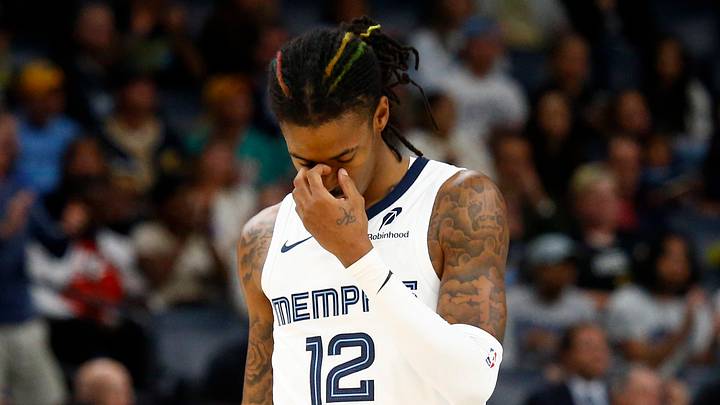
The Portland Trail Blazers' trade for Ja Morant was good value in a vacuum. They managed to turn a negative asset with no upside in Grant into a negative asset with upside in Morant. It's a surprising but worthwhile trade given they didn't have to sacrifice any draft capital.
That said, it's not a home run deal considering Morant's questionable fit on this roster.
Offensively, the obvious concern is the lack of floor spacing. Defensively, it could be a far larger concern, especially if head coach Micah Nori plans on starting Morant alongside Damian Lillard in the backcourt.
The Blazers essentially threw out their defensive identity with this trade, taking a huge step backward from the progress they made over the last few years of this rebuild.
Ja Morant trade cost Portland its defensive identity
Last offseason they doubled down on that established identity by swapping Anfernee Simons for one of the best two-way guards in the league, Jrue Holiday. Portland had a roster full of defensive playmakers between Holiday, Toumani Camara, Kris Murray, Matisse Thybulle, Donovan Clingan, and Robert Williams III.
Fortunately, their rim protectors remain after extending Williams for three more years, but they lost a ton of versatility out on the perimeter.
There's a reason these undersized offensive stars like Morant and Trae Young were traded for very few meaningful assets. Jalen Brunson just proved he's a major exception, but typically it's difficult to build a contending roster around these player archetypes.
Even in Brunson's case, the Knicks did a great job of surrounding him with two-way wings in Josh Hart, Mikal Bridges, and OG Anunoby. That's something the Blazers failed to do during Lillard's first stint in Portland, as the backcourt duo of Lillard and CJ McCollum experienced regular-season success but were never really able to get over the playoff hump.
It seemed like Portland learned from that lesson, finally assembling the roster that Dame needed all those years. We even caught a glimpse of that in their playoff series against the Spurs without Lillard, which was far more competitive than the final 4-1 series suggested. This defensive identity Cronin established from a roster built off length, athleticism, and switchability was a recipe for postseason success.
They were ready to add Lillard back into the picture, benefiting from his elite shooting to address floor spacing concerns while having the defense to cover for his limitations on that side of the ball. While that remains true to an extent with pieces like Camara, Clingan, and Holiday still in the mix, Portland is going to be nothing more than an average defense as long as Morant and Lillard play extended minutes in the backcourt together.
Nori will have to do his best to stagger their minutes, and should even consider benching Morant because of the poor defensive fit.
Meanwhile, Cronin will have to find a way to fill out the Blazers' two remaining roster spots with two-way wings to at least attempt to make up for a defensive identity that has gone down the drain with this trade.
Bringing in Morant is solid value from a talent standpoint. Still, we also have to consider the downsides of how poorly he fits this team's identity, which can't be overstated for a young core still figuring out who they are as a collective.
 Add us as a preferred source on Google