

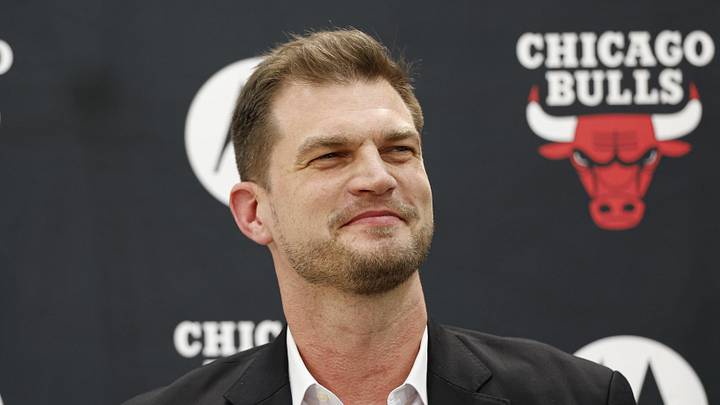
Tiago Splitter has accepted the head coaching position with the Chicago Bulls. That significantly hurts the Portland Trail Blazers, who had Splitter as one of three finalist for their head coaching position.
After recently adding New York Knicks assistant Chris Jent into consideration, Portland has three confirmed finalists: Jent, Minnesota's Micah Nori, and Boston's Tyler Lashbrook.
Splitter essentially did everything he possibly could to earn a more permanent position with the Blazers. He took over just one game into the season following unprecedented circumstances surrounding Chauncey Billups, who was suspended amid federal indictments and recently was set for a trial date of November 2, 2026.
Given Splitter's relative lack of NBA experience, the young Blazers roster, the loaded Western Conference, and Portland's seemingly never-ending injuries, no one would've blamed Splitter or the Blazers for falling short of expectations.
Instead, they somehow still managed to exceed expectations, finishing with 42 wins and the first playoff appearance of their rebuild.
Blazers exceeded expectations under Tiago Splitter
Sure, some of that can be attributed to the NBA's tanking crisis. The Western Conference wasn't as strong as initially expected this season, as teams like the Dallas Mavericks, Memphis Grizzlies, and even the Golden State Warriors seemed to prioritize their long-term outlook down the stretch.
Portland and Splitter still deserve a ton of credit for reaching the postseason, which included a special end-of-season run to not only secure their initial eight seed but also survive the Play-In Tournament against the Phoenix Suns at home against a more experienced Devin Booker and company.
Had Splitter already been on a longer contract or Tom Dundon not entered the picture, there would be no reason for Portland to shake up its head coaching search. It wasn't even clear if the Blazers were intent on actually changing their head coach, considering Splitter was only one of three initial finalists.
Splitter understandably took the surefire position with Chicago over the unnecessary risk with Portland -- a franchise that commenced its head coaching search when Splitter had this team back in the playoffs and also faced the scrutiny of rumored low-ball offers.
Splitter was a good but not great coach. By his own admission, he had warts of his own as he continued to get better throughout the season, similar to Portland's young and inexperienced core.
While the Blazers will miss the players' coach aspect of Splitter bringing out the best in his players, which was not only evident through multiple breakout seasons but also through advocacy at the end-of-season interviews, we can't help but wonder whether this progress would've been made regardless of who was on the sidelines.
As much as Splitter deserves credit for these respective breakouts, it was arguably even more so having to do with general manager Joe Cronin's moves last summer.
By moving on from two of their best players in Anfernee Simons and Deandre Ayton, Cronin accelerated the development of players already showing a positive trajectory, whether that was Donovan Clingan, Shaedon Sharpe, or Scoot Henderson (though that was largely derailed due to an unfortunate hamstring injury).
The point is, Splitter was a good coach, but in a few years, I'm not convinced that Blazers fans will be looking back wishing they kept him instead.
Why the Blazers still won't miss Tiago Splitter
There were several areas Splitter struggled, particularly his lack of creativity when it comes to ATOs, where the Blazers ranked dead last by a wide margin. But most concerningly, it was Splitter's inability to adjust his offensive system to maximize the strengths of Portland's roster.
Their three-point-heavy approach is the best example. Portland ranked third in three-point attempts per game at 42.2, behind only the Golden State Warriors and Charlotte Hornets. Meanwhile, they ranked 28th in three-point efficiency at 34.3 percent, a common theme throughout this rebuild.
Cronin has prioritized length, athleticism, and defense the past few years, especially with his recent draft decisions. The rebuild started with top ten pick Shaedon Sharpe, which was then followed by Scoot Henderson, Kris Murray, Donovan Clingan, and Yang Hansen as the first-round selections. If I were a coach entering this situation, the last thing I would want to do is approach the league leaders in three-point attempts.
To be fair to Splitter, the defensive-minded roster Cronin has assembled essentially has no right answer. They must add more floor spacing for Deni Avdija's downhill attack, which Cronin has already named a top offensive priority.
But the Chicago Bulls are in for a rude awakening if they expect Splitter to be the answer to their problems. This was a Blazers roster set on reaching the postseason regardless of who was on the sidelines, especially considering the number of Western Conference teams that didn't even want to make the playoffs.
Chicago is projected to select North Carolina forward Caleb Wilson with the No. 4 overall pick in the 2026 NBA Draft. That will only further add to the similar floor-spacing limitations the Blazers had, considering their current building blocks are Josh Giddey and Matas Buzelis.
What separates a good coach from an elite coach is being able to optimize your existing roster, which means adapting your coaching style to get the most out of your team's strengths. As good as Splitter was in Portland, I don't think he accomplished that.
Hopefully, he changes his ways with a similar roster construction in Chicago. But from the Blazers standpoint, it's why I feel indifferent about the departure.
 Add us as a preferred source on Google