

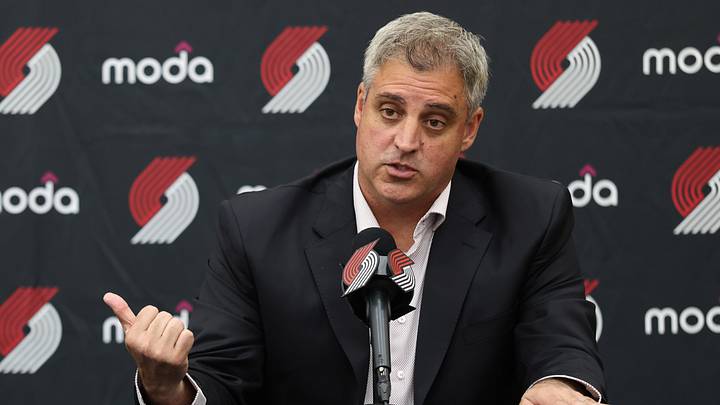
Micah Nori took a huge bet on himself when he accepted his first NBA head coaching position with the Portland Trail Blazers.
Okay, given our head coaching history, "bet" may not be the best word. But there's certainly a far higher level of risk attached to this role for Nori relative to the other positions around the league.
It's largely because of the structure of the contract itself. While he signed on for three years, it's essentially a year-to-year deal. Nori is one guaranteed year, giving the Blazers tremendous leverage with team options for the second and third seasons.
Nori has such little leverage that National Basketball Coaches Association President J.B. Bickerstaff even called the contract a "slap in the face to our value," per ESPN's Tim MacMahon.
"Most ownership understands that there is value in quality coaching and good coaching, and they're willing to pay for it," Bickerstaff said. "Coaching salaries have been increasing because the league understands and owners understand the value of quality coaching. So for a new guy to come in who doesn't have that understanding and to go out and chop at the knees of coaches is a slap in the face to our value."
The Blazers have a Tom Dundon problem that's compounding
Nori addressed these comments earlier in the offseason, saying that he still views this as a great opportunity to gain valuable head coaching experience. In general, this a position he's been trying to get for quite some time, noting that teams around the league would ultimately turn him away because he didn't have that experience coaching at the highest level.
Still, you have to wonder about the instability this deal brings to a young team somehow still trying to find an identity. Portland seemingly had that defensive identity in place under interim head coach Tiago Splitter. Instead of building off what proved to be a working formula, they started tearing pieces down.
While Splitter had this team in the postseason fighting against the San Antonio Spurs, Tom Dundon and the Blazers front office were already in the process of pursuing potential replacements for his position.
Nori has understandably taken an optimistic view of receiving this job, even noting how rare it is for a first-year head coach to take over a playoff team. But is that really a good sign that this job is available after Portland exceeded expectations to reach the postseason as the seven seed in a strong Western Conference?
Nothing Splitter could've done would've been enough, as Dundon seemed set on bringing in a new locker room voice regardless. But is Nori that voice he wanted, or is that just what he settled for within the scope of what he was willing to pay?
What happens if Nori performs well: is a raise or long-term deal in the works, or will we just find the next cheaper replacement and repeat the process? Even in a best-case scenario, the odds seem stacked against Nori in favor of Portland.
He also has to overcome the challenge of piecing this wonky Blazers roster together. The Ja Morant deal, with no follow-up move to clear the backcourt logjam, is a head-scratcher that could potentially do more harm than good to what was an up-and-coming roster.
There are so many questions about the Blazers' roster heading into this 2026-27 season, many of which could've been avoided if they'd simply stayed the course.
While Splitter did enough to earn a more permanent position last season, we don't mind the Nori hiring. What we do mind is the instability that comes from the structure of the deal. We may not see it now, but these cost-cutting measures and moves by Dundon to gain more leverage are compounding problems for Portland.
 Add us as a preferred source on Google