

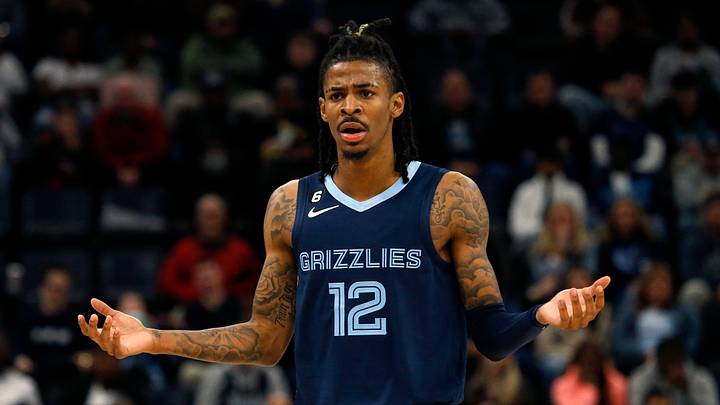
The Portland Trail Blazers were widely viewed as a potential landing spot for Jaylen Brown before the Boston Celtics surprisingly shipped him to their rival Philadelphia 76ers. It was not only a surprising destination but also a relatively underwhelming trade package.
In exchange for the 2024 Finals MVP, the 76ers sent back a 36-year-old Paul George, two first-round picks, and two second-round picks. Because of the package and protections on the attached picks, ESPN's Brian Windhorst has even said some within the NBA circle believe the 76ers essentially got Brown for "free."
It's such a low cost to add a top 20 player in the league. Even the Los Angeles Lakers arguably just had to sacrifice more assets to land Walker Kessler in their recent trade with the Utah Jazz. It raises the question of why a team like Portland couldn't outbid Philadelphia.
Blazers' analytically driven front office passed on Jaylen Brown
Well, it wasn't that they couldn't; rather, they weren't willing to go to that extent. On paper, Brown seems like a great fit for a team that needs a two-way wing and a legitimate co-star for Deni Avdija. But analytically speaking, the Blazers front office wasn't interested, Jay King and Sam Amick of The Athletic recently revealed.
“Another team with widely reported interest, the Trail Blazers, similarly did not join the chase. A Blazers team source said the Blazers were never enamored with Brown, even before Boston made it known he was available on the trade market. Two factors went into the Blazers’ disinterest: Their analytics viewed him as a negative player and the Celtics’ asking price was too high.”
On the one hand, it's encouraging that the Blazers are so analytically driven in their decision-making. On the other, how did that process lead them to conclude that trading for Ja Morant was the big move that needed to be made this summer?
The shocking Morant trade aligns with new owner Tom Dundon's buy-low strategy on distressed assets. Portland wanted to make a value upside play, overlooking the wonky fit and figuring out the rest later.
Still, the question remains: how do the analytics support a team that ranked 28th in three-point percentage last season pursuing a guard that just shot 23.5 percent from deep last season?
How is Ja Morant any better?
At his introductory press conference, head coach Micah Nori praised this team's shot profile. They optimize possessions with the majority of their looks coming at the rim or beyond the arc. Portland even ranked third in three-point attempts per game this past season.
However, none of that data-driven formula works if they don't have the right pieces to implement it. It was a glaring issue last season, one that GM Joe Cronin even highlighted himself as the area Portland needed to address this summer. Instead, they seemed to have ignored the analytical importance of being a good three-point shooting team in the modern NBA.
In a vacuum, this was a good trade for Portland to finally get off Jerami Grant's contract, swapping him for another bad contract with higher upside. That said, in a vacuum, it also would've been great value for Portland to offer a package similar to the one that ultimately led Philadelphia to steal Brown. Not to mention, the far better fit.
It's one thing if Portland only passed on Brown for analytical reasons, but it's hard to see how pursuing Morant isn't a double standard. Different amount of assets surrendered, sure. But the way they approached these trades isn't adding up.
 Add us as a preferred source on Google