

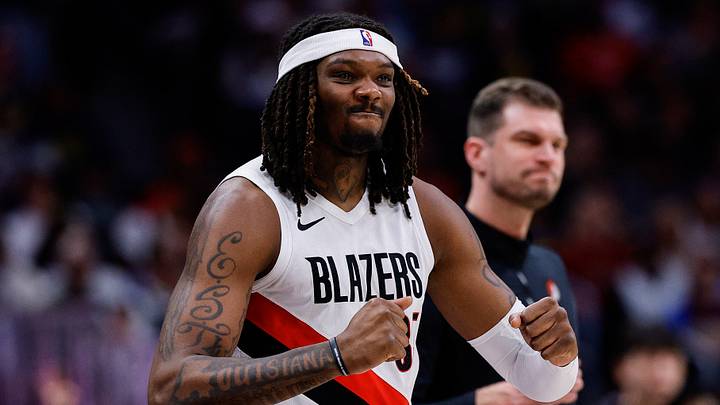
It's definitely not the offseason that anyone envisioned for the Portland Trail Blazers.
Micah Nori will face an immediate challenge to sort out this wonky roster. But whether it was the Nori hiring, the Ja Morant trade, or the Robert Williams III extension, the theme for Portland's moves this offseason was low-risk bets on talent.
They achieved that in the unconventional structure of Nori's deal that drew criticism, the limited assets surrendered to Memphis for Morant, and the injury protections included in Williams' extension. These were calculated bets made by the Blazers to better position themselves in the future.
The hiring of Micah Nori
The general hiring process could've gone far better, and the contract itself received criticism. But in terms of who the Blazers actually hired, it was a tremendous decision.
Nori has been around the NBA for 28 years now and has far more experience than you'd typically expect from a first-year head coach. He's also mentioned how rare it is for a first-year head coach to join a team coming off a playoff appearance.
So while there were certainly bumps in the road to get to this point, the hiring itself seems like a great fit. If there's someone creative enough to get the most out of this talented but messy roster, it's the one drawing comparisons to Ted Lasso.
Grade: A-
Trading for Ja Morant out of nowhere
The trade itself was tremendous value, taking a low-risk swing on Morant by giving up only Jerami Grant, Kris Murray, and cash without sacrificing any draft capital. This is going to be a tough one to grade until we see what Portland's plan is to have all these point guards coexist.
The risk here wasn't in assets, but rather how Morant would complement a growing young core when their newest All-Star, Deni Avdija, also is at his best getting downhill with the ball in his hands. It's a challenge for Nori to sort out how to play to Morant's strengths and use the proper rotations to cover for his weaknesses in defense and floor spacing.
This is a trade worth revisiting, but the on-court fit and financial concerns going forward make it hard to give this cheap talent boost a grade in the A range.
Grade: B-
Extending Robert Williams III to a unique deal
This was arguably the Blazers' best offseason move of the entire summer.
A three-year, $44 million extension is only decent value on the surface for a backup big man who unfortunately has an extensive history of injuries. But the contract is uniquely structured with injury protections and only fully guaranteed money in the first year.
Last season showed a blueprint towards a healthy Williams with what was a successful maintenance program. This contract isn't as risky as some may first assume.
In fact, the risk for Portland would be letting one of the best backup centers in the league leave a void behind Donovan Clingan in the frontcourt. Williams showed his own importance in their first-round series against the Spurs, where he genuinely outplayed Clingan.
Grade: A
Signing Branden Carlson
If there's one team whose players are worth taking a chance on, it's the Oklahoma City Thunder. Their success in evaluating talent means it's almost always worth a flier on a young player from their system, and Branden Carlson is no exception.
He does give them a center logjam, but that's almost a necessity when looking at who is ahead of him in the depth chart. Portland was one Time Lord injury away from having to rely heavily on Yang Hansen, who still isn't ready for rotational minutes. That's where Carlson comes in as much-needed insurance.
Grade: C+
Claiming Micah Potter off waivers
Potter was solid value for Portland to claim a stretch-four after the Indiana Pacers waived him to make room for Larry Nance Jr. He's one of the exact player archetypes the Blazers previously lacked, making this one of Portland's most underrated moves of the summer.
Potter's deal is even non-guaranteed, which makes this a risk-free move. He'll have to earn his spot on the roster, but it's going to be hard for Portland to willingly leave a stretch-four out of the mix, seeing how well he fits what they've been missing.
Grade: B
John Tonje's two-way signing
Tonje had six quiet and inefficient games with the Celtics last season. Still, he showed plenty of promise during his time spent in the G League and Summer League, averaging 18.1 points per game in the former. Portland can benefit from adding Tonje's shooting and shot creation while addressing its lack of wing depth.
This was a good use of the final two-way spot for Portland, with Tonje now joining Chris Youngblood and Jayson Kent.
Grade: A-
The Jeremy Sochan experiment
Sochan's one-year deal is non-guaranteed, making this another smart, low-risk flier for Portland to take on a former top-10 pick who is just 23 years old.
The experiment in question is whether Sochan's inability to space the floor and offensive limitations that ultimately led to his departures in San Antonio and now New York will follow him to Portland. He joins a crowded frontcourt and one of the worst three-point shooting teams in the league.
Perhaps a still worthwhile audition to see if he bolsters their defensive identity enough to overlook those concerns, especially since he once showed a ton of promise in the league.
Grade: B
Morant's poor fit on this roster likely prevents them from being in the "A" range. And while it's certainly been a confusing offseason, it's hard to consider it a truly below average one because they didn't really give up anything. Most importantly, the Blazers kept those Milwaukee Bucks picks that only continue to increase in value with Giannis Antetokounmpo finally out of the picture.
Portland didn't mortgage the best asset of its entire rebuild in a short-term pursuit of a star. And overall, they are set to exit the offseason with a roster more promising than the one they entered with.
Blazers' final grade: B
 Add us as a preferred source on Google