

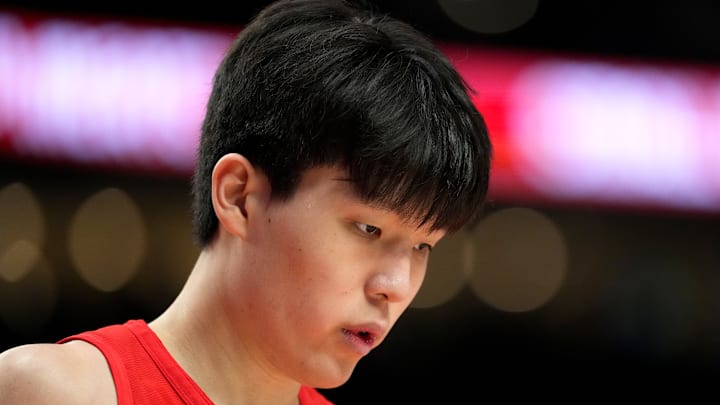
The Portland Trail Blazers traded back with the Memphis Grizzlies in the 2025 NBA Draft. Memphis jumped up to the No. 11 overall pick to steal Cedric Coward, while Portland reached for Yang Hansen at No. 16.
In a vacuum, this draft-day trade was a win for the Blazers. They only went back a few spots and managed to pick up an additional future first-round pick (2028 via Orlando) in the process. But when you put names to the picks and look at each individual asset, this deal becomes increasingly lopsided in Memphis' favor.
Grizzlies won the draft-day trade with Blazers
For one, the Magic have one of the most promising young cores in the Eastern Conference. Paolo Banchero, Franz Wagner, Jalen Suggs, Anthony Black, and Desmond Bane will be reaching their collective prime in 2028, making that likely a late first-round pick for Portland.
Then you compare the draft prospects (Coward to Hansen), and this deal suddenly becomes a no-brainer for Memphis.
The Grizzlies' talented two-way wing currently ranks fifth on the Kia Rookie Ladder, averaging 14.0 points, 6.5 rebounds, and 2.9 assists on 47/34/85 shooting splits. Coward was recently asked if he's afraid of hitting the rookie wall, to which he responded: "I only fear God." He's backed that up with his play, shooting 37.9% from beyond the arc in 2026.
Having the last name of Coward doesn't appear to fit his mentality, as this is the perfect player to help bring back the "Grit and Grind" era in Memphis. That's precisely why he would've fit Portland's newfound identity perfectly as well.
The Blazers are becoming a gritty, defensive-minded team, overcoming playmaking and shooting flaws to find ways to win. Coward would've gone a long way to not only bolstering that identity but also helping address those shooting woes.
Portland's draft-day decision becomes even more questionable after the concerning lack of immediate impact Hansen has had. There's certainly still some reason for optimism. We must be patient with the development of a 20-year-old in general, but especially one coming over from the CBA. However, this draft debate has more to do with Hansen's poor fit compared to Coward's seamless fit on this roster than anything else.
Part of the reason Hansen has looked so out of place in the NBA is that the Blazers can't play to his strengths. He's an elite passer with a high basketball IQ and has been able to showcase that during his time in the Summer League and, most recently, in the G League. But the question mark that will determine Hansen's career trajectory is whether he'll become a good enough player at the NBA level to justify having the ball in his hands as an offensive hub to reach that high ceiling.
Coward has fit in perfectly with Memphis from day one, thanks to his 3-and-D skill set, which translates much more easily. Hansen either needs to become that offensive hub or figure out how to refine his game to impact winning in other ways when he doesn't have the ball. That's the biggest thing separating these two prospects: the scalability of their roles and strengths at the NBA level.
Whether Hansen eventually figures that out remains to be seen. But given how well Coward's rookie season has gone, this draft-day trade is trending in the Grizzlies' favor early on. They landed a surefire asset to add to their young core, while Portland still doesn't know what they have in Hansen at all -- and likely won't for years to come.
 Add us as a preferred source on Google